Neper: Polycrystal Generation, Meshing and Post-Processing#

Neper is a free / open-source software package for polycrystal studies. It generates 2D and 3D polycrystals, from simple tessellations to multiphase or multiscale microstructures, together with their crystal orientations, and meshes them into high-quality finite-element meshes. It also post-processes simulation results (especially from FEPX), and visualizes all of them in publication-quality images.
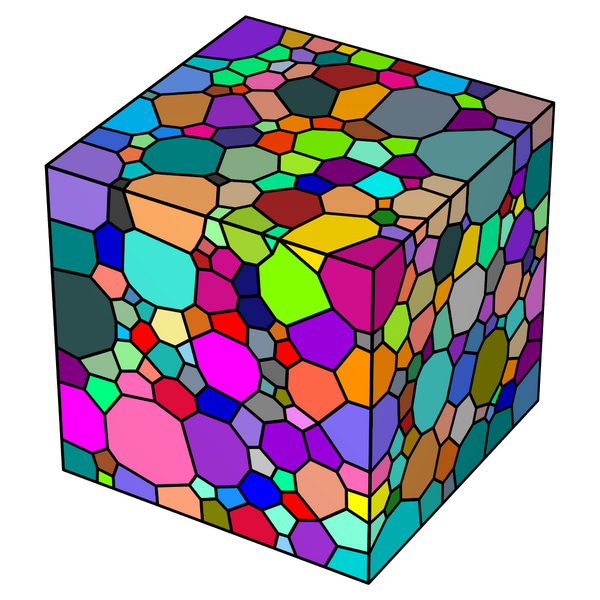
Tessellations from simple to multiphase or multiscale morphologies.
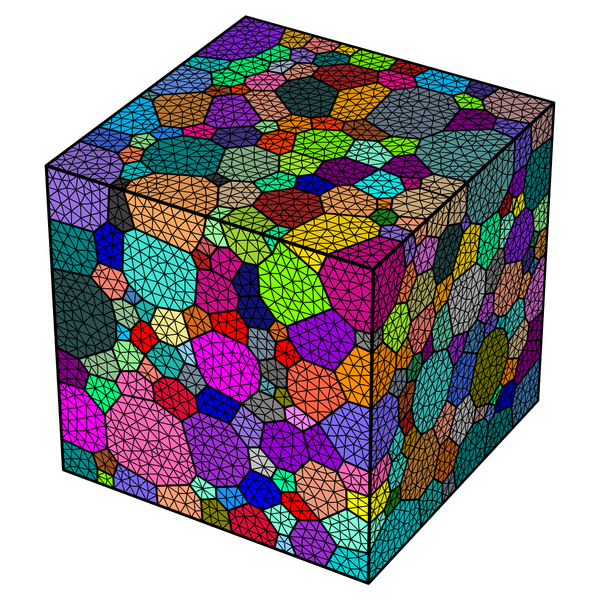
Meshes of tessellations, with uniform or per-grain mesh sizes.
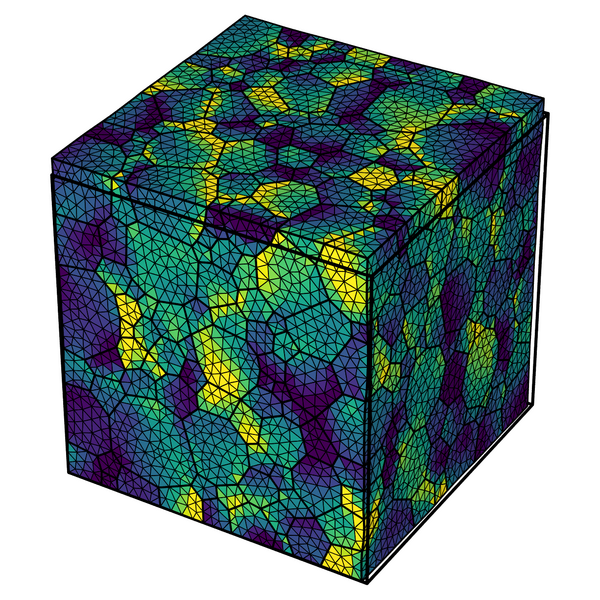
Simulation directories from FEPX results, and their post-processing.
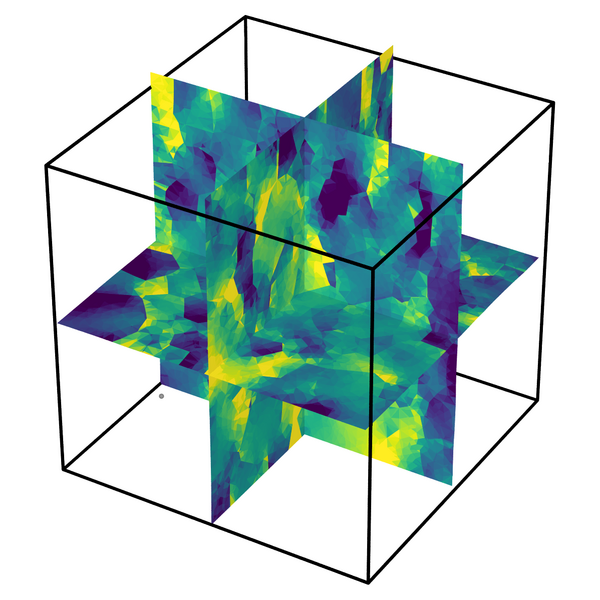
Images of tessellations, meshes and simulation results.
Tip
Neper can also be used from Python: the modules run as Python functions, and tessellations, meshes and simulation results are read into NumPy arrays. See Python Interface.
Note
See also FEPX, Neper’s companion program: a finite element software package for polycrystal plasticity, whose meshes Neper generates and whose results it post-processes.
Neper is developed by Romain Quey at CNRS and Mines Saint-Etienne.